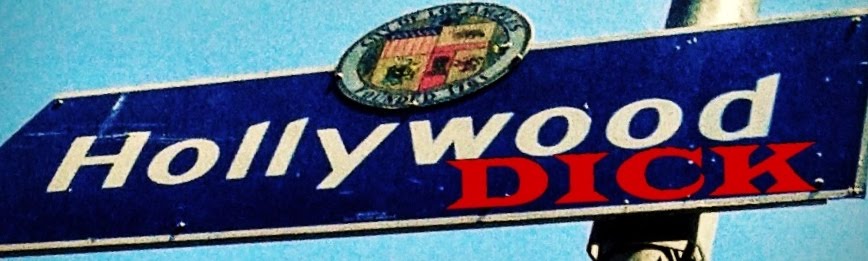
On our journey through life, we may look for signs to tell us where we're headed. We may not find the signs we are hoping for. We may not find any signs at all. Or we may find a sign standing right in front of us in the middle of the road and not know what it means.
On New Years Day, I went back to Joshua Tree to further my exploration of both the Gram Parsons legend and the mystique of the Mojave desert. I had done some research on Gram following my last trip to Joshua Tree and learned there was one more place I had to see to get a more complete understanding of Gram and his legacy. So I booked a night in Room 8 at the Joshua Tree Inn.
Room 8 is the "Gram Parson's Room" at the Inn. It was the room Gram stayed in when he came to visit Joshua Tree and it is the room he was staying in when he died. It has become a bit of a shrine to Gram and a Mecca to his fans. When I mentioned it to my band, most of whom are big Gram Parson's fans as well as fellow songwriters, they all understood my plan. In fact, it is kind of a rite of passage among certain songwriters to write a song while staying in Room 8.
I had another plan in addition to visiting Room 8. I wanted to shoot some video for a song I wrote called "Somewhere in America". I am hoping to put together a music video for the song and put it up on the internet. I thought the unique and spectacular scenery of Joshua Tree would make an excellent backdrop for the song.
So I loaded up the car with my camera and tripod and my guitar and harmonicas and set out for the desert.
On the way out to Joshua Tree the highway cuts through the San Gorgonio Pass between Mt. San Jacinto on the south and the San Bernardino Mountains to the north. The ocean-driven winds blast through this pass on their way to the desert creating a gigantic wind tunnel. A wind farm covers the eastern slope of the pass with over 4000 windmills, each standing over 100 feet tall, that provide electricity for nearby Palm Springs.
I decided to get a shot of the windmills for my video so I pulled off the highway and set up my camera. Unfortunately, when I looked through the viewfinder, the image was distorted and discolored and looked terrible. I couldn't believe it, here I was in the middle of a wind farm hundreds of miles from the nearest electronics repair shop and now suddenly my camera goes on the fritz. I tried using the view screen on the side of the camera, but it was no better. I've always had a little trouble with the view screen, however, and I sometimes have to give it a little whack with the heel of my hand to get it to close properly. For some reason, this time when I whacked it, it started working again. At least long enough to for me to get my shot of the windmills.
I continued my journey to Joshua Tree and checked-in to the motel. The woman at the desk asked, "are you here for the Gram Parson's experience?" I said, "I guess I am."
Room 8 has been kept just the way it was when Gram stayed here, or pretty close anyway. There are pictures of Gram on the wall as well as some vintage concert posters -- including one for the infamous Rolling Stones Altamont show (where Gram appeared with his band The Flying Burrito Brothers.) The furniture and decor are all early seventies style and there is even a CD of Gram's songs in the CD player. There are also a couple of books for guests to look at. One contains news clippings and other reference material that tell the story of Gram's life and death. The other is a guestbook that is filled with names and messages from the thousands of fans that have stayed there over the years.
My first order of business was to shoot some video while I still had some daylight. I set up the camera and once again the picture was messed up. I tried gently whacking the side of the camera as before and that would fix it momentarily, but then it would go bad again. I was getting pretty frustrated, but I wasn't ready to give up yet. I tried squeezing the camera in the place where I had whacked it. Strangely that worked, too. But I couldn't squeeze the camera and be in the shot at the same time, so I tried wrapping the strap from the camera case around it. That didn't work at all. Finally I thought, maybe it just needs a really good whack. I looked around for something to hit it with and decided on a harmonica. It seemed like just about the right size and weight for the job. I gave it a sharp whack and sure enough, the viewfinder cleared up. I hit 'record', grabbed my guitar sat down in front of the Altamont poster and sang "Somewhere in America". Cool.
Next, I went to the liquor store to get some tequila, because no tribute to Gram is complete without a little of that. I stopped for dinner at the Crossroads cafe and headed back to the room. After a shot or two of tequila, I went outside to do a little exploring. Now, the weather in LA had been pretty mild, but up here in the Mojave it was quite a bit colder and the wind was blowing something fierce. I wandered out past the swimming pool to an old house that must have once been the owner's residence but is now overgrown with weeds and vines. I went through a broken gate and onto a dusty old road that led out into the desert. The moon was high and very bright and there were more stars than I'd ever seen. The night sky looked deep and immense but at the same time felt close and real. I stared up at the stars for several minutes until a strong gust of desert wind chilled me to the bone and I decided to head back.
As I went back through the broken gate I heard a rustling sound which I assumed was the wind. All of a sudden a pale white cat leapt out from the scrub and darted up the path in front of me. I know it's supposed to be bad luck if a black cat crosses your path, but what about a white one? Either way, he gave me quite a jolt.
Back in the room, I started looking through the book with the articles about Gram. There was a chapter copied from Marianne Faithfull's book describing a night she and Keith Richards and Gram went out wandering in the desert while on mescaline. At one point, they heard a lonely howling sound and Marianne got a little freaked out. Gram said, "it's all right darlin', just an old coyote."
I read through some of the messages left by the other guests that had stayed in Room 8. I was amazed at how many there were and where they had come from. The night before I was there, a couple had come from Liverpool. The night before that, a guy from Denmark. Before that, a girl from Arizona. They all had something to say to Gram and they all wanted to thank him for his music. I wasn't quite ready to add my comments yet. I still had a song to write.
I worked on the song for about an hour, thinking about all those people who had come to this place for the same reason and all looking for something. After I had about three verses, I decide to get the guitar and work out the chords. I sat at the desk, trying not to sing too loud since it was getting pretty late. The wind was whipping against the cinderblock walls and the little in-room space heater was creaking and groaning. Then I heard another sound. Scratching. At the back door. Scratch, scratch, scratch, then silence. A chill went up my spine. Then again: scratch, scratch -- scratch, scratch. The back door leads to a little walled-in courtyard. It was doubtful anyone would be back there. Unless it was a ghost. Unless it was Gram Parson's ghost!
At about that same moment, I remembered the cat. And almost immediately, I heard a soft 'meow' outside the door. Of course maybe the cat was Gram Parson's ghost. I'll never know, because by the time I got brave enough to go look, it, or he, was gone.
The next morning I copied my song into the guestbook and set out for Joshua Tree.
I spent the whole day singing bits and pieces of "Somewhere in America" into the video camera in front of various rock formations and mountains and stands of Joshua Trees. I had to whack the camera with my harmonica every damn time I turned it on. And every damn time, it worked.
At sundown I was sitting on a low wall overlooking the Coachella Valley and the San Jacinto Mountains. The sun was setting behind me as I tried to look into the camera and sing with icy cold forty-mile-an-hour winds whipping at my face. The camera was shaking on its tripod. What few other folks were up there must have thought I was nuts. I can't say I'd blame them.
As I drove back out of the park, the setting sun lent the evening sky an amazing purple hue. It was overwhelmingly beautiful. As the sky got darker, I saw a shape in the road, standing in the beam of my headlights. I stopped. It was a coyote. He just stood there looking back at me. Just the two of us surrounded by the empty desert and the purple sky. Finally, I honked and he trotted off.
As I headed home to LA, I thought about the coyote.
The coyote is sometimes known as the Trickster. He can appear to help us face the things we have been avoiding. We often trick ourselves by falling into traps of our own device. We think we are safe in those traps because they are familiar. But we are only fooling ourselves. When the coyote finds himself in a trap, he will chew off his own foot in order to be free again.
So what's the trap? How am I fooling myself? Is it this whole fantasy that I have allowed myself to indulge in, quitting my job, pretending to be an artist, tilting at windmills and running around the desert with a video camera making a movie that no one will ever see? Is that the trap?
Maybe.
Or is fear the trap? The last time I was in the desert I saw a jackrabbit. He teaches us about fear. When we are in fear, we dash to the safety of old familiar patterns. Six months ago I broke out of a familiar pattern which I had believed was safe, but was in fact preventing me from being free. I had to chew off my foot.
Now I have to face my fears and try not to fall into the same old traps.
Or maybe I am just fooling myself. It's not always easy to know how to read the signs.
When I was a kid, I took trip once to state park in Kentucky with my Aunt June and Uncle Gibby. They were always fun to be around because they were so cool and interesting. They were young and hip and funny and had both spent time working as actors which made them way more exciting than ordinary people. And they were both deaf.
At some point during our trip I became aware that my aunt and uncle were upset about something, but I didn't understand what it was. Whenever they came to visit I always had to take a crash course in sign language, but I never really got very far. The best I could do was spell out words with my fingers. I picked up a few of the signs for words here and there, but couldn't keep up any kind of a conversation. Fortunately they could read lips fairly well and were very patient when it came to signing words slowly enough for me to understand. But when they started signing to each other, I was lost.
Eventually it was explained to me that they were upset that the state park had made no accommodations for deaf visitors and they weren't able to understand much of what our tourguide had been saying. There was no written information, very few signs or markers and certainly no simultaneous translation.
I remember feeling bad because I could not help them. I didn't know their language and I was unable to tell them what the guide was saying. I felt guilty. I also remember how mad my Uncle Gibby looked. He wasn't mad at me, of course. But he sure was mad at the folks who ran the state park. And he let them know it. He was very good at communicating, better than most hearing people.
I especially loved watching him communicate with my Dad. They were brothers and so my dad had grown up using sign language. It was always an amazing transformation to watch my normally taciturn father become this incredibly expressive, cheerfully animated chatterbox whenever Uncle Gibby was around. But Gibby seemed to bring that out in everyone. We all loved to talk to Gibby because he was so much fun to talk to. He always had something new to say or a new way to say something. He was interested in everything, and he made you interested in whatever he was talking about. He was a born teacher.
Years later, just after college when I was living with my parents and trying to figure out what to do with myself, Uncle Gibby came for a visit. He was in the area to give a guest lecture at Yale on "gestural communication." At the time I had no idea what that meant. I clumsily questioned him about it using my extremely rusty finger-spelling. He smiled and went to his portfolio and pulled out two pieces of posterboard cut out in the shape of 'thought balloons' like you see in comic strips. He held the first thought balloon up to his head. It had the word 'car' written on it. Gibby frowned and shook his head, 'no, that's not it...' He then held up the second thought balloon. This one had a photograph of a car pasted on it. Gibby's face brightened into a smile and he nodded, 'yes, that's it!' He held out both hands as if he were holding a steering wheel and mimed the act of driving. He then mouthed the word "car."
Suddenly I realized that after all these years I could finally speak his language. I laughed. Of course, "car" is not just a word, it's an idea. Communication isn't just about words and sentences, it's about getting your meaning across, however you can do it.
For the rest of that weekend, Gibby and I talked about anything and everything and it was a blast. We acted things out, used props, made faces, gestures, signs, anything we needed. We had long serious discussions, short exchanges, running jokes; we told stories, shared ideas, communicated... It was great.
At the end of his visit, as we were saying goodbye, Gibby signed something to me. He held his fingers to his chin and swept his arm forward and down to say "Thank you," then he formed the letter "C" with both hands and alternately raised them to his mouth, to say "(for) communicating."
I was so happy I almost cried. I gave him a big hug and thanked him too. I was so glad that he understood what I was trying to do and that he appreciated my attempt. And he knew how much it meant to me.
In that one short weekend, I felt like I was able to make a real connection with this man I had always loved but with whom I'd never had a "real" conversation. I will never forget that wonderful feeling of knowing that we understood each other.
What Gibby taught me during that visit has stayed with me and has opened my mind to a much greater understanding of the act and art of communication. Gibby spent his whole life teaching the world how to communicate better. And he never heard a single word. But he showed the rest of us how to hear and how to speak and how to listen and how to understand. Because he really did love to communicate. He loved to find out what others were thinking. He loved to figure out how to get people to understand things. He loved to learn and he loved to teach.
Those of us who knew him were extremely lucky. I feel like he is with me now and I want to make him proud. I am glad I had a chance to learn from him. I am deeply grateful that he was part of my life.
There is legend in the annals of rock'n roll about the death of Gram Parsons, founder of the Flying Burrito Brothers, one-time member of The Byrds, cohort of Keith Richards and unwilling father of the genre known as "country-rock." Gram was a country singer who lived like a rock star and influenced a whole generation of musicians with his encyclopedic knowledge of and unbridled love for country music. Bands like The Eagles, The Grateful Dead, Pure Prairie League and New Riders of the Purple Sage as well as countless musicians including Emmylou Harris, Neil Young, Linda Rondstat, Jonathan Richman, Elvis Costello, Sheryl Crow and of course Keith Richards drew much of their inspiration from Gram.
The legend, however, has to do with a pact made between Gram and longtime friend and road manager Phil Kaufman. The two were attending a funeral for a fellow musician and became disenchanted with the overly-ritualized ceremony. They decided that if either of them died, the other would take the body out to Joshua Tree and burn it in the desert. Two months later, Kaufman made good on his promise.
I had heard bits and pieces of this story before, but never really knew if it was true. So, the other day as I was driving back from Phoenix on Interstate 10, I saw I sign that said "Joshua Tree Next Right" and decided to go take a look.
I had been in Phoenix for the weekend visiting my sister Cindy, who was attending a conference on Multiculturalism in Education. I thought it was kind of timely considering the recent regime change in Washington. You never saw so many gray pony-tails or smelled so much patchouli in your life. Fortunately I avoided the conference altogether and spent my time in the gym and the pool and watching movies on HBO.
I dropped Cindy off at the airport on Sunday morning and started driving west. Since I had the whole day, I decided I would indulge my curiosity whenever the mood overtook me and stop off at any roadside attraction or natural wonder that caught my eye. I had glanced at a map and knew that Joshua Tree National Park was roughly halfway between the Arizona border and the outskirts of LA. I thought it might be nice to take a little detour.
I pulled off the highway onto a two-lane road that seemed to disappear into the desert. I followed the road for about ten miles until I reached a ranger station. There I received some maps and advice as to where I might want to go. I was pretty low on gas and asked where the nearest station was. Forty miles, in the town of Twentynine Palms. But if I went that way I would miss most of the coolest stuff. The next available gas was 72 miles away in the town of Joshua Tree. There was a fork in the road thirty miles north where I would have to make a decision. I would have to cross that bridge when I came to it.
Just as I was about to go, I remembered the legend and asked the ranger if she knew where Gram Parson's body had ended up. She gave me a funny look and then circled a place on my map called Cap Rock. And I was on my way.
I put a fresh CD in the player, "The Joshua Tree" by U2. It is no coincidence that U2 named the album that pays tribute to the American influence on their music after the place where Gram Parsons spirit was released into the desert. The combination of the unearthly scenery and the atmospheric music of U2 was pretty intense. I drove for miles in awe at the beauty and strangeness of the landscape, stopping frequently to hop out of the car and take pictures of sculpted rocks, spidery ocotillo plants and brilliantly haloed cholla cactus. It was a religious experience.
The first half of my drive crossed the low Colorado desert in the southeastern section of the park. Eventually, I reached the intersection where I had to decide if I should head for the closer of the two gas options. Feeling swept up in the adventure, I decided to press on and turned left into the high Mojave desert.
Almost immediately, I encountered a stand of Joshua Trees spread out across the landscape, captured in blazing silhouette by the afternoon sun. The trees were named by Mormons who likened them to Joshua because their uplifted limbs recalled the act of supplication to God. The illumined trees appeared to be engaged in a holy ritual that had been going on since time began.
I stopped for several minutes to appreciate the moment and take a few pictures. Then I drove on.
I passed countless bizarre formations of granite created by tremendous intrusions of molten magma combined with thousands of years of erosion resulting in impossibly gigantic cairns and towering monoliths. I stopped to take some pictures at one such outcropping. My gas gauge was all the way down to empty and my rechargeable camera batteries were dying. I switched to my backup set of batteries and spent about a half hour trying to look through the viewfinder while the stiff desert wind and low-angled sun conspired to rob me of my sight. My eyes were gushing water and it was all I could do to frame a picture and guess if it was in focus. It was also getting cold. And I hadn't eaten since breakfast. But I couldn't stop. I was in a heightened state. It was like a vision quest.
I got back in the car. The U2 CD was on its third time around. I munched some almonds, drank the melted ice from my morning tea and drove on. I passed a sign for a lookout called Keys View and realized I had about fifteen miles to go to get to the town of Joshua Tree and the nearest gas station. My gas needle was as low as I have ever seen it go. I figured I would just about make it. I kept going for about five more miles, then it hit me. I hadn't seen Cap Rock, the place where Gram Parsons was cremated. How the hell did I miss that?
I pulled over and looked at the map. Cap Rock was behind me, right where I had turned past the road to Keys View. Going back would add another ten miles to the trip, at least. And I wasn't sure if I had that much leeway. Plus it was starting to get dark. But I had to go back. I had come this far.
In the setting sun the rocks and trees and tumbleweeds took on a glorious amber tinge. Coming at them from another angle was like seeing them all anew. I spotted the intersection I'd passed before and there was Cap Rock just beyond. I pulled off the road and grabbed my camera.
I crossed the prickly terrain fairly quickly and spotted a group of rock climbers. They are everywhere at Joshua Tree. I confirmed that this was indeed Cap Rock and started searching for what would be the most likely place where Gram was released. I started circling clockwise around the gigantic rock, snapping pictures as I went. It was really cold now, but I didn't dare go back to the car for a jacket since the sun was almost gone and I didn't have much time. When I got to the western face of the rock, the last rays of the sun were just disappearing from the top of the "cap" -- a huge boulder that seems to have been set on top of the rock by some mischievous giant, just to make people wonder how it got there.
I came around to the northern face as the sun disappeared behind the San Bernardino Mountains. I noticed a strange outcropping of rock that looked like an massive stone lean-to. It was a slab that had broken off from the boulder and come to rest against two other rocks to form an alcove in the shadow of the granite wall. In front of the alcove was a cross laid out in rocks on the sand. And painted on the sides of the alcove were another cross and the words "God Bless GP". I had found it.
I began furiously snapping pictures as I got closer and closer. There were various items left on the stone cross, a bottle of tequila, a metal star, a copy of a Gram Parsons DVD. On the rocks that formed the sides of the alcove were written messages and song lyrics. Some folks had left guitar picks and coins and shiny stones in the cracks of the rocks.
I kept taking pictures, but now my back-up batteries were dying. And it was almost dark. I kept shutting down the camera and re-arranging the batteries trying to coax one more picture out of it. And somehow, it kept working. I took picture after picture, each time the camera would run out of juice and each time I would bring it back to life. Finally it died for good. But not before I got an amazing shot of the evening sky with the joshua trees reaching up to heaven and Gram's cross in the foreground.
I went back to the car to try and warm up. I looked for another set of batteries, but by then it was too dark anyway. I did find an old toy compass I kept in my backpack and brought it back to the alcove to lay on the cross for Gram. Hopefully, he's already gotten where he needs to go, but I figured there might be other travelers who pass by this place that might be looking for a little direction.
As I went back to the car, a jackrabbit leaped out from behind a tumbleweed and shot across my path. As a spirit guide, the jackrabbit teaches us about fear. Although we do not want to allow fear to run our lives, the fact is, fear is always a part of our lives and we must learn to respect it if we are going to overcome it.
I got back to the car and crossed my fingers. Sure enough the engine cranked to life and I drove back up the road to the town of Joshua Tree. When I reached the ranger's station it was full-on dark. I was amazed I had made it with almost no gas, but then I learned I still had five miles to go. The ranger told me not to worry though, it was all downhill from there.
When Phil Kaufman learned that his friend Gram Parsons had died, he knew what he had to do. He borrowed a hearse, drove to the airport, hijacked the coffin (with Gram inside,) drove out to Cap Rock, doused the corpse with gasoline and set his friend on fire.
Phil was later charged with theft of a coffin and ordered to pay a $700 fine. There was no law against stealing a dead body. What was left of Gram was flown to New Orleans and buried in the family plot. Phil's escapades have become a part of music history and have even been made into a film starring Johnny Knoxville called Grand Theft Parsons. There is also a documentary about Gram called Fallen Angel that tells the story of Gram and Phil's last ride together.
Gram loved Joshua Tree and now that I have been there I understand why. He wanted his soul to be set free in that magical place and thanks to his pal Phil, he got his final wish. Now the story and the place have taken on their own meanings like all legends do. But I like the story and the place and will add them to my own mythology. And I will go back to Joshua Tree, because there is much more to learn and experience there. But I have to thank Gram for being the one to lure me out there in the first place. And maybe that is as good a reason as any.