"I like to watch."My first job in the movie business was as an usher at the Alpha 3 Cinema in Louisville, Kentucky. I was a senior in high school and Alpha 3 was the local "arthouse" theater. Or at least it tried to be. The summer after I graduated, Alpha 3 underwent a procedure we euphemistically referred to as "twinning". That meant that what had once been a fairly cool theater with a full-sized screen that showed intelligent films for a small but discerning audience was butchered by the forces of capitalism and ignorance into two smaller theaters, one of which continued (for a while) to show decent movies and another that showed commercial crap.I didn't know it at the time, but it was the beginning of the end of a golden era. Someone once said, you never know you're in a golden era until it's too late. I had grown up during a renaissance of Hollywood filmmaking. Movies like Bonnie and Clyde, 2001: A Space Odyssey, Patton, The French Connection, The Godfather and Jaws had turned the old studio system on its head and breathed fresh life into worn-out genres. And in 1977, a movie called Star Wars completely rewrote the book. These same movies that had ushered in the era of maverick directors had also ushered in the era of huge weekend grosses, cookie-cutter sequels and massive marketing campaigns. Hollywood knows a good thing when it sees it.But for a time, we lived in a world where passionate young directors threw convention out the window, breaking every rule in Hollywood to put their personal visions onto the screen. And the result was some of the best movies ever made.Some of these movies wound up at the Alpha 3 and provided my early education as a filmmaker. Even before I started working at 'Alpha' I was frequent patron. My older sister Cindy worked there for a while and so did my younger sister Susan. I saw a lot of great movies there before and after the "twinning". I remember seeing a midnight showing of Fantasia on the big screen. That was also the night I learned that there were quite a lot of potheads in Louisville. It was at Alpha that I saw Robert Altman's brilliant Nashville and the dreamlike 3 Women. I saw Bob Rafelson's Stay Hungry with the then unknown Arnold Schwarzenegger. I saw Annie Hall at Alpha with my girlfriend Christy who worked the box office. I saw films by Francois Truffaut, Clint Eastwood, Milos Forman and Martin Scorcese and many others. But there was one movie I saw at Alpha that really knocked me out, and made me think a lot about someday making my own movies. That movie was called Harold and Maude and it was made by a guy named Hal Ashby.Recently I read a very interesting book called Easy Riders, Raging Bulls that tells the story of how a group of young directors infiltrated Hollywood in the early 70's and radically changed the landscape of movie making. Guys like Altman, Coppola, Bogdanovich, Scorcese, Spielberg, Hopper, Friedkin, Rafelson, Lucas and DePalma. And Hal Ashby. I never realized how much Ashby influenced me until I read this book and looked at the list of movies he made. Between 1971 and 1979 Ashby made six of the coolest movies ever to come out of Hollywood. And each of them made a strong impression on me. Harold and Maude (1971) was Ashby's second movie as a director. He had worked as an editor for several years and earned an Oscar for his work on In the Heat of the Night. What really got me about this movie, besides the hilariously dark tone and the bizarre relationship between a young man and a sweetly crazy elderly woman, was the way Ashby used music and imagery to create moods and evoke the inner life of the characters. He used the songs of Cat Stevens for the all of the music in the movie. This was back when Cat Stevens was huge.The Last Detail (1973) was one of Ashby's movies I didn't see until I was in college and had the benefit of the Wesleyan Film Series. With a gritty script by Robert Towne (that drew fire from the studio for its liberal use of the "F" word) and a signature performance by Jack Nicholson, the movie is classic early 70's: anti-genre, anti-heroic, anti-Hollywood.Shampoo (1975) teamed Ashby and Towne with the poster boy for "new" Hollywood, Warren Beatty. The story, set on the eve of Richard Nixon's first election as president, captures the shifting values and vague morality of a new generation as the old generation tightens its grip on the political power structure. The movie could just as easily be about the new generation of filmmakers trying to break away from the old studio system. But Ashby provides no easy answers or uncompromised characters. All are flawed yet still sympathetic.Bound For Glory (1976) played at Alpha 3 and I must have watched it half a dozen times. It was my introduction to the Woody Guthrie legend and the imagery of the film is as indelible as the imagery in Woody's songs. But even in this mythic portrayal, Ashby gives us a complex and difficult hero. Not all of Woody's choices are easy to accept. In the end it is a bittersweet tribute to an American icon.Coming Home (1978) is one of those rare movies that can transcend mere entertainment and serve as a catalyst for social change, and in this case even healing. The story focuses on two Vietnam vets, played by John Voight and Bruce Dern, and their struggle to cope with returning to "the world." Jane Fonda plays a woman who is married to Dern's character, a gung-ho career officer, but falls in love with Voight's character, a paraplegic. Once again Ashby manages to show both sides of a complex issue with humanity and balance. In the climactic sequence, Voight delivers a heartfelt speech to a group of high-schoolers, imploring them to consider that they have a choice to go to war or not. Meanwhile, Dern's character tragically loses his battle with his post-war demons and ends his life.Being There (1979) is Ashby's last great movie. Peter Sellers plays 'Chance', a dimwitted gardener whose simplistic observations and accidental friendship with a rich and powerful man set him on the path to becoming the next president, without having a clue as to what is happening. The idea that a complete simpleton could be elected president seemed far-fetched at the time, but of course that was before Reagan and "W". Sellers' low-key performance combines masterful comic timing with honesty, sweetness and innocence. Shirley MacLaine is hilarious as the wife of Chance's wealthy pal. I also loved Ashby's use of music in this movie, including the song "Basketball Jones" by Cheech and Chong and Eumir Deodato's jazzed-up version of Also Sprach Zarathustra (also known as the theme from 2001: A Space Odyssey.)Unfortunately, Hal Ashby didn't fare too well in the 80's. The golden age had ended and the era of the studio executives and producers had begun. Movies were being made based on marketable formulas featuring likable, one-dimensional heros. Steven Spielberg and George Lucas recycled Han Solo into Indiana Jones and spun off two sequels. Scorcese and Coppola both struggled to find audiences. Bogdanovich crashed and burned. Hopper went underground. But Ashby's fate was the cruelest. His legendary drug-use and paranoia drove him further and further from the mainstream while his obsessive editing style managed to piss-off the last few studio execs willing to work with him. Realizing he needed to turn his life around, Ashby quit doing drugs and tried to adopt a more business-friendly persona. But nobody was buying it. Ashby was treated as an outcast in Hollywood. Adding injury to insult, Ashby developed pancreatic cancer and died in 1988.It almost seems like the change in Hollywood's business climate killed Ashby as much as the cancer. Ashby flourished in a time when even studio execs were willing to take risks, bend rules and push the envelope. But when the big corporations gobbled up the studios, there was little breathing room for creative spirits like Ashby. What's ironic is that without the creative spirit and the risks, there would be no Hollywood in the first place. Oh sure, you can always make a dozen sequels to Pirates of the Caribbean or rip off another comic book or put Will Ferrell, Vince Vaughn, Owen Wilson and Ben Stiller in a locked room and watch them endlessly improvise "clever" lines. But if you really want to make great movies then you have to take bold risks. You have to give the Ashbys of the world a chance.Fortunately, there are still a few creative spirits left in Hollywood. The rise of the independent film movement has provided a home for some of them. Of course, many of the so-called independent companies are actually owned by the studios and are still being governed by bottom-liners as opposed to visionaries. But it's better than nothing. I wonder what kinds of movies Ashby might be making if he were still around today. Those are the kinds of movies I'd like to make.

The other day I was having lunch with a friend who mentioned that she had finally gotten around to reading one of my recent blogs. I hate that word, by the way: "blog." T.S. Eliot once said that the ugliest word in the English language was "television." I would like to nominate "blog" as runner-up. Anyway, my friend said she didn't actually finish the blog, because she got frustrated that it took me so long to "get to the point."
I don't get a lot of feedback on my writing. Every once in a while I do get a note from someone saying they liked one of my 'blogs', which is nice. As a screenwriter I depend on feedback, but it is not that easy to come by. A few weeks ago I got some amazing feedback on a script I wrote from a professional script analyst. It was specific and clear and extremely helpful. And it cost a hundred bucks. But it was well worth it, because without feedback I'm just a guy sitting in a room talking to himself.
So my friend's comment made me think a lot about why I write these 'blogs' and wonder exactly what the "point" is.
Perhaps coincidentally, over the past few months I've been reading some other blogs. At first I was just curious -- I read one blog about dating in L.A. and offered some wry comments. Then I read some of the other comments and thought a couple of them were funny and insightful. This led me to read the blogs written by the commenters, and then the comments on their blogs and so on and so forth. Soon I found myself caught up in an online "community" of bloggers -- reading their latest blogs, leaving my comments, following up on other reader's comments, etc. It was fun. I felt like a part of something exciting. People who wanted to share ideas. Fellow writers.
The initial excitement only lasted a couple of weeks until I began to notice a pattern. Most of the blogs I read seemed to be about blogging and many of the comments were from people either promoting their own blogs or sniping other bloggers. This interesting little world began to feel less and less like an open forum to exchange ideas and opinions and more and more like junior high school. The point of it all seemed to be popularity and cliquishness rather than expression and understanding.
Plus the writing didn't really hold up. Too many of the bloggers felt that simply venting their spleens was somehow naturally of interest to others. It can be, of course, when the venter actually has something worth saying. But most of the time the blogger is just whining about some ridiculous personal injustice or irritating inevitability with no attempt at originality or insight. Like, "I hate politicians because they are full of shit." Or, "My job sucks because my boss is a jerk."
And to make matters worse, these banalities are encouraged by a dimwittedly devoted posse who celebrate their mediocrity with such accolades as "u r awesome" and "I <3 you". It took me days to figure out that "<3" is supposed to be a heart, as in "I heart you."
Another common misconception among the bloggers has to do with attempted humor. Almost all of the bloggers that I've read belong to the misguided school of comedy that believes anything inappropriate or obnoxious is by definition hilariously funny. I'm not saying that being inappropriate or obnoxious can't be funny. But it usually isn't.
Eventually I became disinterested with the bloggers. There's only so much bad writing I can handle. Just because someone has an opinion and knows how to type doesn't make them a writer. Writing is a craft, not a hobby.
But bad writing is inescapable. Turn on the TV and you will be bombarded by it. Browse a magazine, if you dare, and you will surely step in it. Even books are not immune. I just got finished reading a novel that may get turned into a movie one day. It was an interesting story poorly written. But what really got me were the mistakes -- bad grammar, improper usage, incorrect spelling! I thought books were supposed to have editors. But either the editors didn't notice the mistakes or they didn't care. Or maybe they didn't even know the difference.
Fortunately, there is also some very good writing out there. I have a few favorite TV shows that I think are quite well done. There are certain authors I admire and will read anything and everything they've written. I've seen some decent journalism among the pages of a few magazines here and there. And then there's the movies.
This year, of the five movies nominated for Best Picture, three were based on works of literature and two were original screenplays. No Country for Old Men won Best Picture as well as Best Adapted Screenplay. The book was written by Cormac McCarthy who is one of those writers I truly admire. And the script by the Coen brothers was brilliant. I will see any movie by the Coen brothers.
There Will Be Blood was adapted by P.T. Anderson from a novel called Oil! by Upton Sinclair. For the first twenty minutes or so of the movie there is not a word of dialogue -- and yet you learn everything you need to know about the main character. That is great screenwriting.
Atonement was based on a book by Ian McEwan which employs a self-referential style of writing called metafiction to present its theme. After what felt like a slow start, I was utterly drawn into the world of the movie. By the end I was both emotionally moved and intellectually stimulated by the masterful use of both literary and cinematic technique.
The script that won the Oscar for best original screenplay was Juno by Diablo Cody. Many of you may have heard that Diablo Cody used to be a stripper, but you may not know that she first got noticed by Hollywood because she was also a blogger. She is one of the rare few who can be inappropriate yet funny. And by the way, God bless her for writing a movie in which a sensitive, pale, shy, skinny, guitar-playing cross-country runner ends up being the cool, sexy hero who gets the girl at the end. If only life were really like that then I would have a girlfriend like Diablo Cody.
However...
I originally began writing this 'blog' as a newsletter to keep in touch with friends and family I left behind when I moved to Hollywood sometime in the last century. I hoped it might serve as a kind of living memoir of my path from obscurity to glory. Instead it is merely a meandering chronicle of my decaying orbit around the fringes of oblivion. A cautionary tale, if you will.
So what, then, exactly is the point? It's a good question.
Is getting noticed the point? Is it all just a big popularity contest like junior high school? If a writer taps on his keyboard and there's no one around to hear him, does he make a sound?
I think maybe the point is craft. I am exercising my craft. I just want to keep trying to get better at what I do. And the only way to do that is to keep practicing.
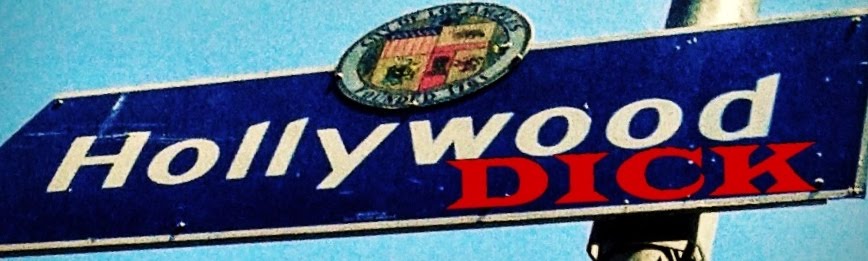
Or maybe I should become a stripper. After all, I already have my stage name.
 We had a big primary election here in California the other day. And even though I am registered as an Independent, I was able to cast my vote by requesting a Democratic ballot at the polling place. This fact was explained to me by none other than the luscious Scarlett Johansson, who took the time from her busy schedule to call me on the phone and explain exactly what I needed to do to make my vote count. I thought it was very sweet of her to think of me during such an important time in our nation's history. I wanted to show her how much I appreciated her thoughtfulness -- hoping that perhaps we might get together sometime to discuss politics. I didn't get a chance, however, as the line went dead as soon as she finished talking. I thought perhaps her cell phone had run out of juice.Later I found out that a friend of mine had received a very similar call from Scarlett on the same day that I did. She must have been making a lot of calls that day. No wonder her battery ran out.So, on election day, armed with Scarlett's helpful advice, I went to the polls to vote. It seemed a little silly to me that I should have to actually walk four blocks over to the apartment complex on King Street just to put my mark on a cardboard ballot. Wouldn't it be simpler and more efficient just to 'text' my vote in? It works on American Idol. And they could have the results instantly, instead of waiting for Fox news to make an "early" projection three hours after the polls have closed. Maybe they will have that worked out by November.The polling place was crowded when I got there so I had to stand in line for a few minutes. This gave me the chance to think about who I might want to vote for. There was one candidate who I really liked, but didn't think could actually win a presidential election. And there was the other candidate who seemed to understand what it takes to win and is willing to do make the necessary moral sacrifices to do so. At this point, maybe I should explain that I have a pretty poor track record when it comes to voting for President: I don't think I have ever voted for a candidate who actually won. (This includes a couple of elections where I didn't vote at all -- back when I was feeling particularly disenchanted with the American system as a whole.) So, I was faced with the choice of voting for the person I thought could actually win, just to see what that might feel like, or voting for the person I actually wanted to win, and thereby dooming him to certain defeat.Earlier that day, I had lunch with my friend Glen who was very enthusiastic about one of the candidates, who like himself, happens to be a black man. I asked him how he can have so much faith in the American system to believe a black man could actually get elected President. Hell, I'm a white, male, right-handed, blue-eyed, heterosexual Christian and I have no faith in the system whatsoever. Glen said that black people have always relied on hope, because without hope they would have little else to live for. He said he believes that one person can still make a difference in this country and this particular candidate was just the man to do it.It was inspiring to hear Glen talk about hope and it made me want to believe that he was right. One man can make a difference. My vote is important. I should vote for the person I believe in and not the one who seems more likely to win.But as I stood in line at the polling place, it occurred to me that hope has never done me much good. In fact, hope has almost always led me astray. You could say that hope has been my worst enemy. Nothing that I have hoped for has ever come true. In fact my persistent belief in hope has propelled me down a path of continuing disappointment and failure. If I didn't have hope, I might have had a chance at leading a normal life. And even if a "normal life" might not bring me much joy, at least it wouldn't be filled with discouraging solitude. Hope sucks.Now, I know what many of you are thinking -- and I've heard it all before. It's my negative attitude toward life that has caused me all these disappointments. If I believe that things won't work out, then they won't. It's a self fulfilling prophecy. We create the world we live in. Etc., etc.Bullshit.The reality is, I never expect things to go wrong. I always think my dreams are going to come true. That's the problem. Take dating for instance. Every time I meet a woman that I'm attracted to, I am filled with optimism and, yes, hope. I actually believe that despite all of the bad experiences in the past, this time it's going to work out. This time I've found someone who will accept me for who I am. Someone who will appreciate me. Someone who feels the same way about me as I do about her.And what happens? I get my hopes up. And then I get them dashed on the rocks again.'Oh,' you're thinking, 'but that's because you get your hopes up too high and you scare her off by being too enthusiastic and needy.' Not so fast, smarty-pants. I've thought of that, too. And in order to offset my natural tendency to get ahead of myself, I actually enlisted a brain trust of advisors to help me gauge my actions and responses when it comes to dating. Three close friends (two women and one man) with whom I could doublecheck my instincts before plunging headlong into unbridled optimism. The result, I spent six months wooing a woman with calm and measured actions only to find out that she had meanwhile fallen head over heels in love with a total jerk who dumped her three months later.Because it doesn't matter what I say or do or how I feel or don't feel. She's already decided within the first fifteen minutes of meeting me whether I am in or out -- based on a set of complex variables that I have no control over whatsoever. And my misguided hopes have no effect on the outcome other than to set me up for another fall.The same goes for screenwriting. Every time I write a script I believe it is a winner. Every time I meet a producer or an agent, I think this is the person who's going to help me. Every time I send out a script to someone, I think they're going to love it. Every time the phone rings I think it might be someone with an offer. Every time I check my email, I think there will be a message from one of the countless people I am trying to keep in touch with, finally writing me back to tell me that they read my script and would like to meet with me.And pretty much every time I am wrong.So why should I have hope? It's completely illogical. Worse that that, it's insane. Sane people realize that particular actions lead to particular results. If you perform a particular action over and over again, each time with the same result, then you would be completely crazy to expect a different result the next time you performed that action. Even if you hope for it to be different. Even if you believe it will be different. Even if you visualize it and concentrate on it and ask the universe to magically deliver you a different result. That's the clinical definition of insanity.But hope persists. Why? I myself once came up with a logical basis for hope. If I send out a script and I hope it's going to sell, then I feel good inside. Whereas if I send out a script and I assume no one will like it, I feel lousy. Therefore it is logical to hope for the best. That way you get to feel good up until the point when you find out that you are wrong. Also, most enterprises, including dating and screenwriting, have a certain amount of luck involved -- which is to say, the more opportunities you take advantage of, the better your odds of success. Therefore by hoping for the best, you remain encouraged and continue to keep trying, thereby improving your chances.Unless you die before you succeed. Then you are just a misguided loser.So what's the point of hope if it leads you to continue trying to achieve something that has so little chance of success that it is virtually impossible? Seen in this light, hope is like a drug that people become addicted to until it destroys their lives. What do you think keeps the lights of Las Vegas burning through the night? Hope. Everybody in Vegas is hoping for something. But who's really succeeding? The guys with the computer programs that keep track of every nickel, dime, and quarter that changes hands, that's who. And at the end of the day, the house wins again. To expect any other result would be crazy.So with this in mind, I walk up to the voting booth, ballot in hand, to cast my vote. I know it would be crazy to think that the guy I believe in could actually become President. So what would be the point? I would just be throwing my vote away. Wouldn't I?That night I watched the election returns the way a gambler watches a game on which he has bet everything he's got. It was as if my entire life's philosophy were up for validation or rejection. To hope or not to hope? That is the question.I kept switching between five different channels to see who would make the first projection in California. I believe it was MSNBC who won the race on that one. Around two hours after the polls closed, with fifteen percent of the vote, they called the winner. And it was no big surprise. My candidate lost. As usual. I blame myself. Maybe if I hadn't voted for him, he might have had a chance. That's what I get for voting with my heart instead of my head. That's what I get for hoping.But I continued to watch the returns as the results from the other states came in. And it was kind of weird. My candidate was doing really well. In fact you could say he was winning. The contests were pretty close in a lot of cases, but he sure did get a lot more votes than people expected.And a week later he did it again. He won more primaries, in places nobody expected him to win. In fact at last count, he is actually in the lead.And the Giants won the Superbowl!I guess you never really know what's going to happen. Which I suppose might be considered another logical reason to believe in hope. Not that I'm going to go all flaky and buy a copy of "The Secret" or anything.I'm just saying.